
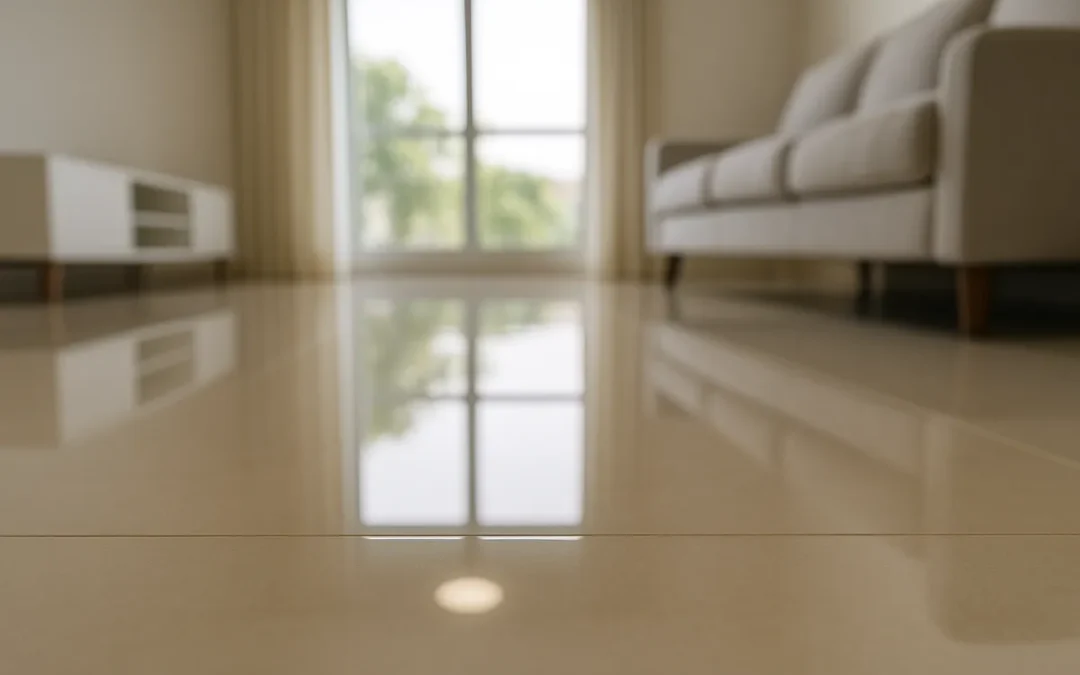
Ask for a shiny floor tile in a Malaysian showroom and you will be shown a nano polished tile. The name sounds technical, and most people buy it on the look alone: a high-gloss surface that reflects the ceiling lights like water. This guide explains what the nano treatment actually is, why it exists, and how to decide whether it belongs on your floor.
What is a nano polished tile?
A nano polished tile is a polished porcelain or homogeneous tile whose surface has been given an extra sealing treatment after polishing.
Here is why that treatment is needed. A homogeneous tile is pressed and fired into a dense body, then the surface is ground and polished flat to produce the gloss. Polishing opens up thousands of microscopic pores in the surface that were sealed inside the fired body. Left open, those pores drink in dirt, oil and coloured liquids, which is why an old polished tile can look dull or blotchy no matter how much it is mopped.
The nano treatment fills those pores. A liquid sealer with extremely fine particles is applied and cured into the surface, so the pores are closed and the tile becomes much harder to stain. As a side effect the gloss level goes up, because the surface is now smoother than polishing alone could make it. That is the mirror shine people recognise.
So “nano polished” means: a polished homogeneous tile, with its pores sealed. It is not a different kind of tile, and it is not a coating that sits on top like a varnish. Our homogeneous tiles guide covers the body underneath.
Nano polished vs ordinary polished vs glazed polished
Ordinary polished homogeneous
Same body, no sealing. Cheaper, but it stains more easily and the gloss is lower. Some installers apply a sealer on site to compensate, which works but wears off over time.
Nano polished homogeneous
Sealed at the factory. Better stain resistance and a higher, more even gloss. The colour and material run through the whole tile, so a chip shows the same colour underneath.
Glazed polished porcelain
A different construction: a porcelain body with a printed glaze on top, then polished. This is how marble-look and stone-look glossy tiles are made. The pattern range is far wider than nano polished homogeneous, which is mostly plain colours and speckled or subtle stone effects, but a deep chip will show the plain body under the glaze. Our tile types guide explains glazed versus full-body in more detail.
Where nano polished tiles work well
- Living and dining rooms. The classic use. A light-coloured nano polished floor bounces light around and makes a room look bigger and cleaner.
- Corridors and hallways. Hard-wearing, easy to mop, and the shine holds up under foot traffic.
- Shops, showrooms and offices. Full-body construction and stain resistance make them a sound commercial floor in dry areas.
- Bedrooms. Fine, though many people prefer a matt or wood-look tile for a softer feel underfoot.
Where they do not belong
- Bathrooms, wet kitchens and anywhere that gets wet. A polished surface is slippery when wet. This is the single most important thing to know. For wet floors use a matt or textured tile with a slip rating; our anti-slip tiles guide explains what to look for.
- Car porches, balconies and outdoor areas. Rain plus gloss equals a fall. Use an outdoor-rated textured tile instead; see our outdoor tiles guide.
- Homes where the gloss will annoy you. Every footprint, dust mote and smear shows on a mirror surface, especially in dark colours with afternoon light across the floor. If nobody in the house enjoys mopping, a matt tile will look cleaner more of the time.
Pros and cons in one place
Pros
- High, even gloss that brightens a room.
- Much better stain resistance than an unsealed polished tile.
- Full-body: chips and wear do not show a different colour.
- Hard and dense, suitable for heavy traffic in dry areas.
Cons
- Slippery when wet. Not for bathrooms, wet kitchens or outdoors.
- Shows dust, footprints and scratches more than a matt surface.
- Pattern range is narrower than glazed porcelain.
- The nano seal resists stains; it does not make the tile scratch-proof. Grit under furniture legs will still mark it.
How to care for a nano polished floor
- Sweep or vacuum before mopping. Grit dragged around by a wet mop is what dulls a polished floor over the years.
- Use a neutral cleaner. A pH-neutral tile cleaner and clean water. Avoid acidic cleaners, bleach-heavy products and abrasive powders, which attack the sealed surface.
- Wipe spills promptly. The seal buys you time, not immunity. Coffee, curry and coloured drinks should still be wiped up rather than left overnight.
- Felt pads under furniture. Chair and table legs are the main source of scratches.
- Doormats at every entrance. Most of the grit on a floor walks in from outside.
- Do not wax or polish. A nano polished tile does not need it, and a layer of wax makes it slipperier and attracts dirt.
A floor looked after this way keeps its shine for many years. One that is mopped with a gritty mop and a strong detergent will dull within a few.
Choosing one
Look at the tile at full size and in the light of the room it is going into. Gloss changes colour dramatically: a beige that looks warm under showroom lights can read as pink or grey in afternoon daylight. Check the edge for rectification (a precisely ground edge lets the tiler use a very thin joint, which is what makes a polished floor look continuous), and confirm the tile is sealed at the factory rather than relying on a site-applied sealer. Then decide the grout colour with the tile in hand; our grout guide covers that.
See our nano polished tiles and the wider homogeneous tiles range, and compare them beside glazed polished porcelain on our floor tiles page.
Nano polished, glazed polished or matt? The only honest way to decide is to see all three side by side under real light. Bring your floor plan to our Sungai Buloh showroom.
Frequently asked questions
What does nano mean in nano polished tiles?
It refers to the very fine sealing treatment applied after polishing, which fills the microscopic pores that polishing opens up. That is what gives the tile its stain resistance and extra gloss.
Are nano polished tiles the same as homogeneous tiles?
A nano polished tile is a homogeneous (full-body porcelain) tile that has been polished and sealed. All nano polished tiles are homogeneous; not all homogeneous tiles are nano polished.
Are nano polished tiles slippery?
Yes when wet, like any polished tile. They are for dry indoor areas. Use a matt or textured tile in bathrooms, wet kitchens and outdoors.
Do nano polished tiles scratch?
The surface is hard, but grit under furniture or shoes can still scratch it, and scratches show more on a glossy surface. Felt pads and doormats prevent most of it.
How do I clean nano polished tiles?
Sweep first, then mop with a pH-neutral cleaner and clean water. Avoid acids, bleach and abrasive powders, and never wax the floor.