
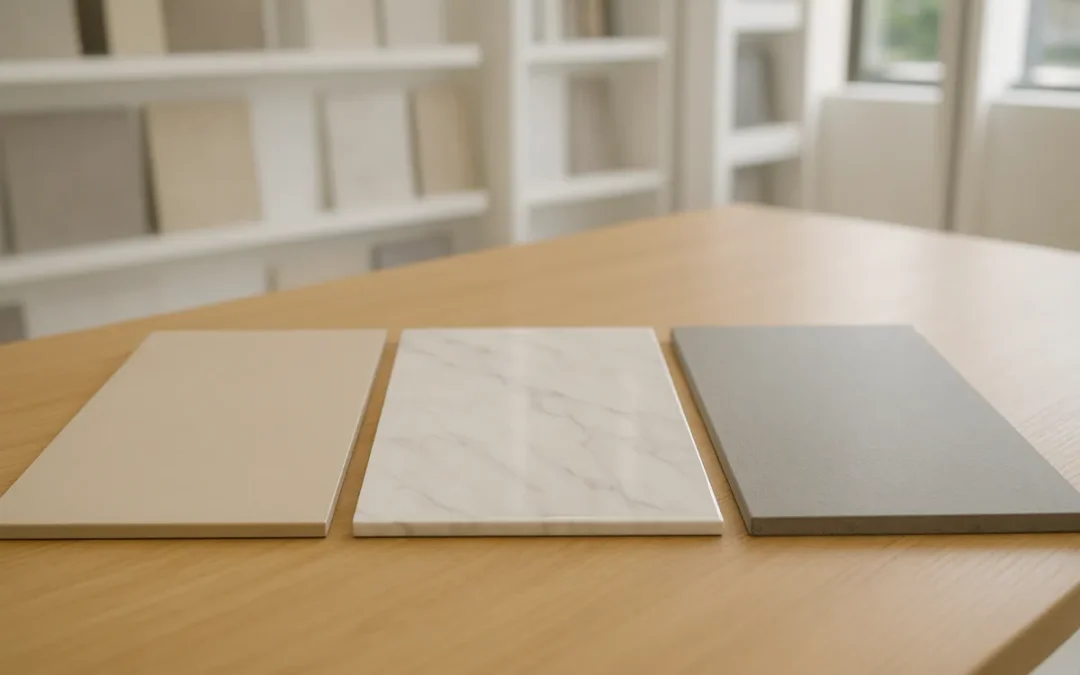
Walk into any tile showroom in Malaysia and three words come up again and again: ceramic, porcelain and homogeneous. On the display boards they can look almost identical. Once they are laid, they behave very differently. One is perfect for a bedroom wall and a poor choice for a car porch. Another will outlast the house but costs more to cut and lay.
This guide explains what each type actually is, how they compare on the things that matter, and which one to choose for each room.
The short answer
- Ceramic tiles are lighter, easier to cut and usually the most affordable. Best for walls and for dry, low-traffic floors.
- Glazed porcelain tiles are dense and water-resistant, with a printed glaze on top that can look like marble, stone, cement or wood. Best for most floors in the home, including bathrooms and kitchens.
- Homogeneous tiles are porcelain with the same colour all the way through the body. Best for heavy-traffic areas, commercial spaces and anywhere a chip must not show.
What is a ceramic tile?
A ceramic tile is made from a mix of clay and minerals, pressed into shape and fired in a kiln. The body is relatively porous, so it is almost always finished with a glaze, a glass-like coating that carries the colour and pattern and seals the surface.
Because the body is softer, ceramic tiles are easy to cut and drill, which keeps installation quick. They are also lighter, which matters on walls. The trade-off is strength and water absorption: the body takes in more water than porcelain, and a deep chip will show the different-coloured clay underneath the glaze.
What is a porcelain tile?
Porcelain is a type of ceramic, made from finer, more refined clay and fired at a higher temperature. The result is a much denser body. The usual definition used by tile standards is a water absorption of 0.5% or less, compared with several percent for ordinary ceramic.
That density is what makes porcelain harder, more resistant to cracking and better suited to wet areas. Most porcelain sold for homes is glazed porcelain: a porcelain body with a printed glaze on top. Modern printing lets glazed porcelain reproduce marble veining, natural stone, concrete and timber convincingly, which is why it has become the default floor tile in many Malaysian homes.
What is a homogeneous tile?
A homogeneous tile, sometimes called full-body porcelain, is porcelain in which the colour and material run right through the tile. There is no separate glaze layer. If the surface is chipped or worn down over years of foot traffic, the colour underneath is the same.
Homogeneous tiles come in matt, textured and polished finishes. They are the traditional choice for shop floors, offices, corridors and car porches in Malaysia because they take heavy wear without showing it. We cover them in more depth in our complete guide to homogeneous tiles.
How they compare
Water absorption
Porcelain and homogeneous tiles absorb very little water, which makes them the safer choice for bathrooms, wet kitchens and outdoor areas. Ceramic tiles absorb more, which is not a problem on a wall behind a basin but is a reason to avoid them on floors that stay wet.
Strength and wear
Homogeneous is the toughest of the three, followed by glazed porcelain, then ceramic. For a normal home, glazed porcelain is strong enough for every floor. Homogeneous earns its place where traffic is heavy or where furniture and trolleys are moved often.
Look and design range
Glazed ceramic and glazed porcelain offer the widest range of looks, because the design is printed onto the glaze. Homogeneous tiles have a more limited palette, usually solid colours, speckled salt-and-pepper patterns and stone effects, although polished homogeneous tiles can look very refined.
Cutting and installation
Ceramic cuts easily with basic tools. Porcelain and homogeneous tiles are harder and need a good cutter and a tiler who knows how to handle them, especially in large sizes. That can add to labour time.
Cost
As a general rule, ceramic is the most affordable, glazed porcelain sits in the middle and homogeneous and large polished porcelain are at the top. Size, finish and brand move the price as much as the type does, so compare like with like.
Which tile for which room?
- Living and dining room: glazed porcelain or polished homogeneous. Large formats such as 600 x 600 mm or 600 x 1200 mm make the space feel bigger. See our floor tiles page for ideas.
- Bedrooms: glazed porcelain for the floor. Wood-look porcelain gives the warmth of timber without the worry about humidity or termites.
- Bathroom floor: matt or textured glazed porcelain or homogeneous with a slip-resistant surface. Avoid polished finishes underfoot.
- Bathroom walls: ceramic or glazed porcelain. Ceramic is perfectly suitable here and keeps the walls lighter. Browse our bathroom tiles for combinations.
- Kitchen floor and wet kitchen: porcelain or homogeneous with a matt, slip-resistant finish that copes with oil and water. More in our kitchen tiles guide.
- Kitchen backsplash: glazed ceramic or porcelain with a smooth, easy-to-wipe surface.
- Car porch, balcony and outdoor areas: homogeneous or outdoor-rated porcelain with a textured finish. Never use a wall tile or a polished tile outside.
- Shops, offices and corridors: homogeneous, for its resistance to wear.
Three mistakes to avoid
- Using a wall tile on the floor. Wall tiles are not made to take foot traffic and will crack or wear quickly.
- Choosing a polished tile for a wet floor. A high-gloss surface looks beautiful and becomes slippery the moment it is wet.
- Buying on the photo alone. Colour and texture change under different light. See the tile in person, ideally a full-size piece, before you commit.
Where to see them side by side
We carry ceramic tiles, glazed porcelain tiles, porcelain tiles and homogeneous tiles. The easiest way to choose is to see and touch them together, under real light, with your floor plan in hand.
Not sure which type fits your room? Bring your floor plan to our showroom in Sungai Buloh and compare ceramic, porcelain and homogeneous tiles side by side.
Frequently asked questions
Is porcelain better than ceramic?
For floors and wet areas, usually yes: porcelain is denser, stronger and absorbs less water. For walls in dry areas, ceramic performs just as well and is often more affordable and easier to install.
Is homogeneous tile the same as porcelain?
Homogeneous tile is a type of porcelain. The difference is that its colour runs through the whole body, while glazed porcelain has a printed layer on top of a plain body.
Can I use ceramic tiles in the bathroom?
Yes, on the walls. For the bathroom floor, a porcelain or homogeneous tile with a slip-resistant finish is the better choice.
Which tile is best for a Malaysian home?
For most homes, glazed porcelain on the floors and ceramic or glazed porcelain on the walls covers almost every room. Use homogeneous or outdoor-rated porcelain for the car porch and any area with heavy wear.
How can I tell porcelain from ceramic in the shop?
Look at the edge and the back. Porcelain feels heavier for its size and the body is usually fine and dense, while ceramic is lighter and the body is often a reddish or darker clay. The easiest way is to ask for the product specification, which lists the water absorption.