
Grab Bar
Grab Bar Basics for a Safer Bathroom
A grab bar is the one bathroom accessory bought for what it does rather than how it looks. Wet tiles, a step into the shower and a floor that never quite dries are where most falls at home happen, and a bar within reach turns a slip into a stumble. This category holds straight bars in several lengths and angled bars for the shower corner. Fit one beside the shower and one by the water closet, and screw both into something solid.
-

GRAB BAR SRT393B-18
View product -
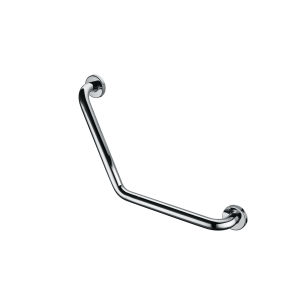
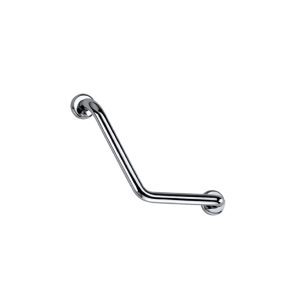
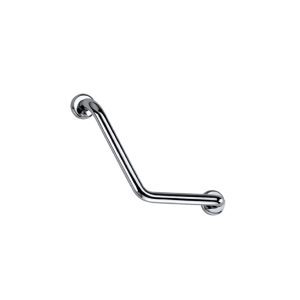
S/STEEL 304 ANGLE GRAB BAR 16″ SRT393-16
View product -
S/STEEL 304 ANGLE GRAB BAR 18″ SRT393-18
View product -
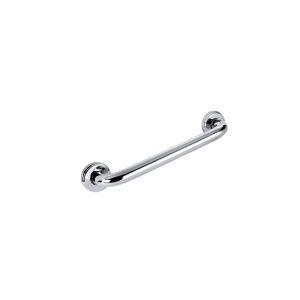
S/STEEL 304 GRAB BAR 24″ SRT392-24
View product -
S/STEEL GRAB BAR 12″ SRT392-12
View product -
S/STEEL GRAB BAR 18″ SRT392-18
View product
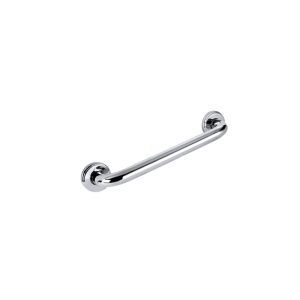
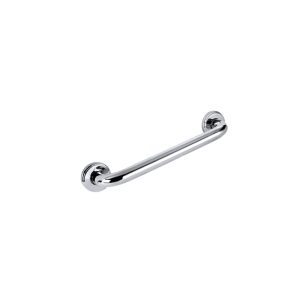
Buying guide
Choosing and Fitting a Grab Bar
A grab bar is only as strong as what it is screwed into, so choose the wall position first and the bar second.
What to Look For in a Grab Bar
Length and shape. A straight bar suits the wall beside the water closet or along the shower. An angled bar suits the shower corner, where the hand moves from standing to sitting. Go longer than you think: a short bar is a single handhold, a longer bar lets the hand move along it.
Diameter and grip. A tube of roughly 25 to 32mm sits naturally in most hands. A brushed or knurled surface grips better than polished chrome when both the bar and the hand are wet.
Material. Stainless steel 304 is the sensible choice for a wet Malaysian bathroom. The tube can be hollow; what carries the load is the flange and the screws, so ask what those are made of and how many screw holes each flange has.
A towel rail is not a grab bar. If anyone in the house will lean on it, buy a grab bar. A single towel rail is fixed for the weight of a towel, not a person.
Where to Fit It and How
Positions that work. Beside the water closet, a horizontal or slightly angled bar at about 700 to 800mm from the floor. In the shower, a vertical bar at the entry to hold while stepping in, and a horizontal or angled bar on the wall you face if there is a seat or a stool.
Fix into something solid. Brick or concrete takes a proper plug in every screw hole. A false wall or a lightweight partition needs a timber backing behind the board or an anchor rated for a pulling load. A grab bar that comes out of plasterboard is worse than no bar at all.
Order of work. Mark the positions before tiling so the holes land in tile centres, not on grout lines. Drill slowly with hammer action off, then silicone the top edge of each flange so water runs off it.
If the bar is for an older parent, fit it before it is needed. The rest of the bathroom accessories range is in the same finishes, so it does not have to look like hospital equipment.
Common questions
What is a grab bar for?
A grab bar is a fixed handhold in the bathroom for steadying yourself on a wet floor, stepping into a shower or bath, and sitting down or standing up from the water closet. It is fixed for a person's weight, which is what separates it from a towel rail.
Where should a grab bar be placed in a bathroom?
One beside the water closet and one at the shower are the usual pair. Beside the water closet, a horizontal bar at about 700 to 800mm from the floor. At the shower, a vertical bar by the entry and, if there is a seat, a horizontal or angled bar on the wall in front of it.
Can I use a towel rail as a grab bar?
No. A towel rail is fixed with small screws for the weight of a towel. A grab bar has a heavier flange, more fixings and is screwed into solid wall or a timber backing. If someone will lean on it, it has to be a grab bar.
What material is best for a grab bar in a wet bathroom?
Stainless steel 304, for the bar and for the fixings. In a Malaysian bathroom that never fully dries, plated zinc corrodes at the flange where water sits, and that is the part that carries the load.
Can a grab bar be fitted to a plasterboard or partition wall?
Only with a timber backing fixed inside the wall or an anchor rated for a pulling load. Standard plasterboard plugs are not enough. If the wall is already closed, ask a contractor to open it and add backing; it is a small job compared to a fall.
Fixings are the part that fails: ask the contractor to show you what is behind the tile before the bar goes up.
Visit the showroom