
Wall Mounted Kitchen Taps
Wall Mounted Kitchen Tap: When the Pipe Is in the Wall
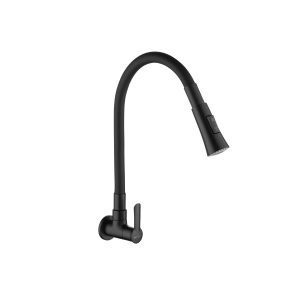
A wall mounted kitchen tap comes out of the wall above the sink instead of through the counter, which is how most older Malaysian wet kitchens are plumbed and how many new ones are laid out to keep the counter clear. This category holds wall mounted flexible kitchen taps alongside pillar-mounted mixer taps with a pull-out hose, for a kitchen where the pipe position is already fixed. Check where the pipe comes out before choosing; the mounting cannot change on the day.
Buying guide
Choosing a Wall Mounted Kitchen Tap
A wall mounted kitchen tap follows the pipe: get the height and the centre right before the tiler starts, and the tap is the easy part.
What to Look For in a Wall Mounted Kitchen Tap
The pipe decides. A cold-only wall tap needs one stub coming out of the wall. A mixer needs two at a fixed spacing. Whatever is already in the wall is what you can buy for, unless the wall is being opened.
The spout. A flexible spout swings to a second bowl and lifts for a pot. A fixed swivel spout is simpler for a single bowl. Either way the outlet should land over the centre of the bowl, so measure from the wall to the bowl centre.
Material. Stainless steel 304 or brass, because a wet kitchen tap sees heat, oil and hard water together. The aerator should unscrew for descaling.
If the pipe is under the counter. A pillar tap with a pull-out hose does the same reaching job from below. The full kitchen faucet range covers both.
Height, Splash and Fitting
Height. The spout outlet about 200 to 300mm above the sink rim. Higher splashes on a shallow bowl; a deep single bowl allows a taller tap. Choose the kitchen sink first and set the pipe from its rim.
Tiling. The tap flange sits on the finished tile, so the pipe stub must stand proud by the right amount. Ask the plumber to check the stub length against the tap before the tiler starts, and seal the thread with tape, not silicone.
Wet kitchen, dry kitchen. A wall tap suits the wet kitchen, where the wall is tiled and the counter is often a simple concrete slab. In a dry kitchen with a stone counter, a pillar tap through the counter is the usual choice.
Bring a photo of the pipe stub to the showroom; with it, the choice between a cold tap and a hot and cold mixer is settled in a minute.
Common questions
What is a wall mounted kitchen tap?
A kitchen tap whose body is fixed to the wall above the sink, fed by a pipe coming out of the tiled wall, rather than a pillar tap that stands on the sink or counter. It keeps the counter clear and suits a wet kitchen with a tiled wall.
Can I change a wall mounted kitchen tap to a pillar tap?
Only by re-routing the pipe under the counter and cutting a tap hole in the sink or counter, which is plumbing and fabrication work. The other way round is the same job in reverse. Decide the mounting before the kitchen is built.
How high should a wall mounted kitchen tap be?
The spout outlet about 200 to 300mm above the sink rim. Set the pipe height from the finished sink, which means the sink is chosen and its rim height known before the plumber fixes the stub.
Are wall mounted kitchen taps cold only?
Many are, because most Malaysian kitchens have no hot water at the sink and the wall carries one pipe. A wall mounted mixer exists, but it needs two pipes at a fixed spacing set into the wall before plaster.
Which is better for a wet kitchen, a wall tap or a pillar tap?
A wall tap, if the wall is already plumbed. It stays clear of the splash on the counter, there is no hole in the sink to seal, and the spout can be long enough to reach a big bowl. A pillar tap wins in a dry kitchen with a stone counter.
Photograph the pipe stub before you shop: it tells us whether a cold tap or a mixer will fit.
Visit the showroom