
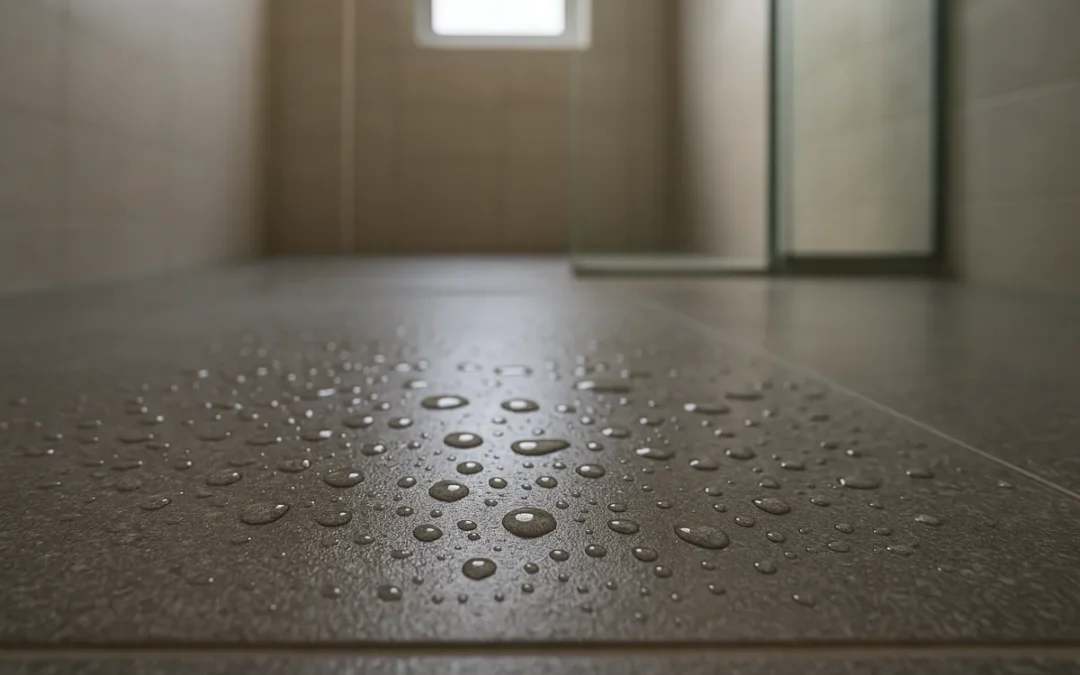
A wet bathroom floor is one of the most common places for a fall at home, and in Malaysia’s climate floors get wet often: showers, mopping, rain carried in from the porch, a splash from the wet kitchen sink. The right tile does not remove the risk, but it makes a real difference.
Tile makers describe grip with slip-resistance ratings. This guide explains what those ratings mean in plain terms and which one to look for in each part of the house.
What makes a tile slippery?
Three things decide how slippery a floor is: the surface texture of the tile, what is on it (water, soap, oil) and what is on your feet. A polished tile has almost no texture, so a thin film of water turns it into a skating rink. A matt or textured tile breaks up that film and gives the foot something to grip.
That is why the finish matters more than the material. A porcelain tile can be very safe or very slippery depending on whether it is textured or polished.
The R rating (R9 to R13)
The most widely quoted rating is the R rating, from the German standard DIN 51130. The tile is tested on a ramp: a person in safety shoes walks on an oiled sample while the ramp is tilted steeper and steeper, and the angle at which they start to slip gives the rating.
- R9: the lowest grip. Fine for dry indoor floors such as living rooms and bedrooms.
- R10: moderate grip. The usual choice for home bathrooms, kitchens and areas that get wet occasionally.
- R11: good grip. Suited to outdoor areas, car porches, ramps, wet kitchens and shower floors.
- R12 and R13: very high grip, mainly for commercial kitchens, factories and industrial floors. Rarely needed at home, and harder to clean.
Barefoot ratings (A, B and C)
The R test uses shoes and oil. For places where people walk barefoot on wet floors, a second standard, DIN 51097, grades tiles as A, B or C:
- A: barefoot walkways and dry changing areas.
- B: showers, pool surrounds and wet barefoot areas.
- C: steps into pools, sloping pool edges and the wettest areas.
Not every tile is tested to both standards. If a tile is going into a shower or around a pool, ask whether it carries a barefoot rating as well as an R rating.
Which rating for which area?
- Living room, bedrooms, dry corridors: R9 is enough. You are free to choose a polished or semi-polished look here.
- Bathroom floor (outside the shower): R10 or higher, matt finish.
- Shower floor: R11 or a B barefoot rating. Smaller tiles also help here, because the extra grout lines add grip and follow the slope to the drain.
- Dry kitchen: R10.
- Wet kitchen: R10 to R11. Cooking oil makes floors slippery in a way water alone does not. See our kitchen tiles guide.
- Car porch, balcony, garden paths and outdoor stairs: R11, because rain, moss and dust all reduce grip outdoors.
- Homes with elderly family members or young children: go one step higher than the minimum in the bathrooms and wet areas.
Safer does not have to mean rough
A common worry is that anti-slip tiles feel like sandpaper and are impossible to clean. Modern R10 and R11 porcelain tiles are much better than that: many have a fine structured matt surface that looks like natural stone or concrete and feels smooth to the hand while still gripping underfoot.
Very high ratings such as R12 and R13 are different. Their deep texture traps dirt, so they suit commercial kitchens and workshops, not a family bathroom.
How to keep anti-slip tiles safe
- Clean them properly. Soap scum and grease fill the texture and reduce grip over time. Use a tile cleaner rather than soap-based products, and rinse.
- Do not seal or wax them with a glossy product. A shiny coating undoes the texture.
- Get the fall right. A floor that drains properly does not hold standing water. This is down to the screed and the tiler, not the tile.
- Add grab bars where needed. In a bathroom used by elderly family members, a grab bar next to the shower and toilet is as important as the tile.
How to check a tile’s rating
The rating is part of the tile’s technical specification. Ask for it before you buy, and ask whether it comes from a test report. If a tile is described as “anti-slip” with no rating attached, treat that as a description, not a measurement.
Tell us which area you are tiling and we will show you the tiles in our range that suit it. Ask on WhatsApp, or see them in person at our Sungai Buloh showroom.
Frequently asked questions
What is the best anti-slip rating for a bathroom?
R10 for the general bathroom floor, and R11 or a B barefoot rating inside the shower area.
Are matt tiles always anti-slip?
Matt tiles are usually less slippery than polished ones, but matt is a look, not a rating. Check the R rating to be sure.
Can I use polished tiles in the bathroom?
On the walls, yes. On the floor, a polished tile becomes slippery when wet, so it is best avoided.
Can I make my existing tiles less slippery?
There are anti-slip treatments that etch the surface, and anti-slip mats or strips for showers. They help, but results vary and the treatment can change how the tile looks. For a renovation, choosing the right tile is the more reliable fix.
Is R11 too rough for indoors?
Not usually. Many R11 porcelain tiles have a fine texture that is comfortable indoors and easy to clean. It is R12 and above that start to feel rough.