
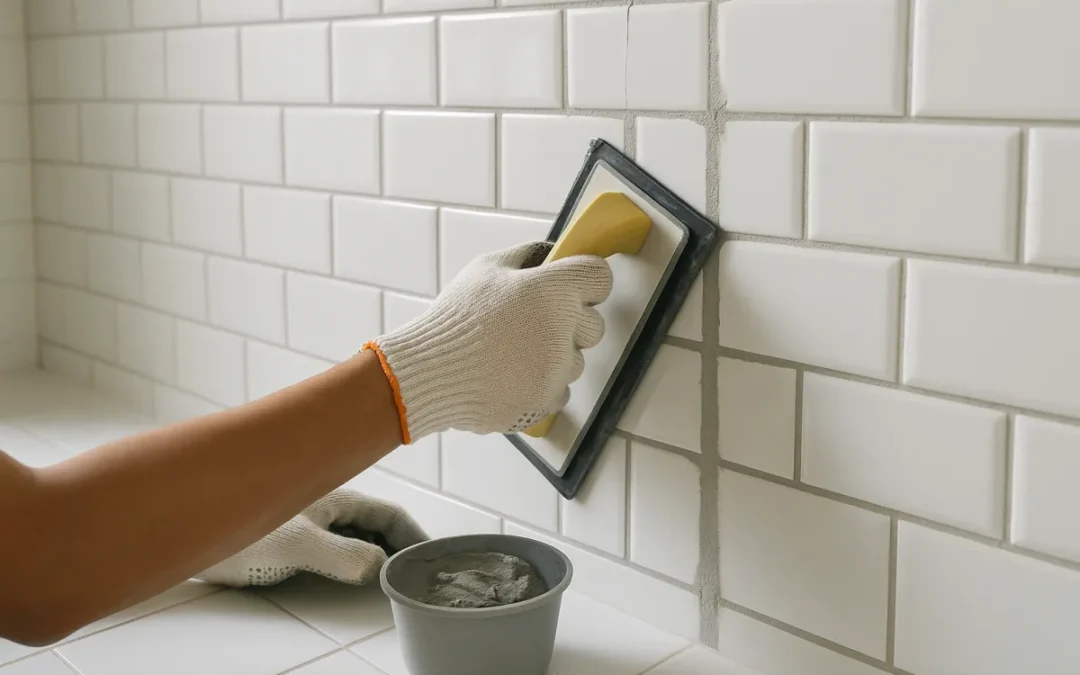
Grout fills only a few millimetres between each tile, yet it is often the first thing that makes a floor look old: darkened joints in the bathroom, stained lines in the kitchen, cracks along the car porch. Choosing the right grout and the right colour matters as much as choosing the tile.
What grout does
Grout fills the joints between tiles. It locks the tiles in place, stops dirt and water getting underneath, and gives the surface a finished look. Because it is more porous and softer than the tile, it is also the part that stains, wears and cracks first.
Cement-based grout
Cement grout is the standard grout in most homes. It is a powder mixed with water, pressed into the joints and wiped clean. Modern cement grouts contain additives that improve strength and water resistance and come in a wide range of colours.
- Pros: affordable, easy for any tiler to apply, easy to clean off the tile face, wide colour choice, easy to repair.
- Cons: porous, so it can absorb stains in kitchens and darken in bathrooms over time. It benefits from a sealer in areas that stain.
- Best for: living areas, bedrooms, walls and most bathroom walls.
We carry Davco colour grout, a cement-based grout for floor and wall tiles available in a range of colours.
Epoxy grout
Epoxy grout is made from resin and a hardener mixed together. Once set, it is hard, dense and almost non-porous.
- Pros: highly resistant to stains, water and many chemicals; does not need sealing; keeps its colour; very strong.
- Cons: costs more, sets fast so it is harder to apply, and needs a tiler experienced with it. Mistakes on the tile face are harder to clean up.
- Best for: shower floors, wet kitchens, kitchen backsplashes behind the stove and sink, commercial kitchens and pool areas.
Cement or epoxy: which to use where
- Living room, bedrooms, dry corridors: cement grout.
- Bathroom walls: cement grout, sealed.
- Shower floor: epoxy grout if the budget allows; otherwise a good cement grout, sealed.
- Wet kitchen floor and backsplash: epoxy grout, because oil and sauces stain cement grout quickly. See our kitchen tiles guide.
- Car porch and outdoor: an exterior-grade cement grout with movement joints, or epoxy in areas with oil drips.
Many homes mix both: cement grout for most of the house and epoxy only in the wettest, most stain-prone areas.
How wide should grout joints be?
- Rectified tiles (tiles with precisely cut edges, common in large porcelain) can take narrow joints of about 2 mm.
- Standard tiles usually need about 3 mm to allow for small size differences between tiles.
- Outdoor areas need slightly wider joints to allow for movement in the heat.
Always follow the tile manufacturer’s recommendation. A joint that is too narrow for the tile causes uneven lines and can lead to chipped edges.
How to choose a grout colour
Match the tile for a seamless look
A grout close to the tile colour makes the joints almost disappear. This is the safe choice for large-format tiles, marble-look tiles and small rooms that you want to feel bigger.
Contrast for pattern
A contrasting grout, such as dark grout on white subway tiles, turns the grid into a design feature. It looks striking on a feature wall, but it also shows every uneven joint, so it needs a careful tiler.
Choose a mid-tone for floors
Pure white grout on a floor almost always darkens with dirt. A light grey or a grout a shade darker than the tile hides everyday dirt and still looks clean years later.
Check it under real light
Grout dries lighter or darker than it looks when wet. Look at a dried sample next to your tile before deciding.
Keeping grout clean
- Wipe spills in the kitchen quickly, before they soak in.
- Clean bathroom grout regularly with a tile and grout cleaner to prevent mould and mineral build-up.
- Reseal cement grout in wet areas as the sealer manufacturer recommends.
- If grout cracks or crumbles, rake it out and regrout early, before water gets under the tiles.
Need grout to match your tiles? Ask us for Davco colour grout and we will help you pick the shade against your actual tile.
Frequently asked questions
Is epoxy grout worth it?
In wet and stain-prone areas such as shower floors and wet kitchens, yes. For living areas and bedrooms, a good cement grout is usually enough.
Why does my bathroom grout turn black?
Usually mould and soap residue in porous cement grout. Regular cleaning with a tile and grout cleaner, good ventilation and sealing the grout all help. Epoxy grout resists it best.
Can I put epoxy grout over old cement grout?
Not directly. The old grout has to be raked out to a sufficient depth first so the new grout can bond properly.
What grout colour is best for white tiles?
Light grey is the most practical: it looks clean and hides dirt. Pure white looks crisp at first but darkens on floors.
How long does grout take to dry?
It depends on the product and the weather. Follow the drying time on the pack before walking on the floor or getting it wet.