
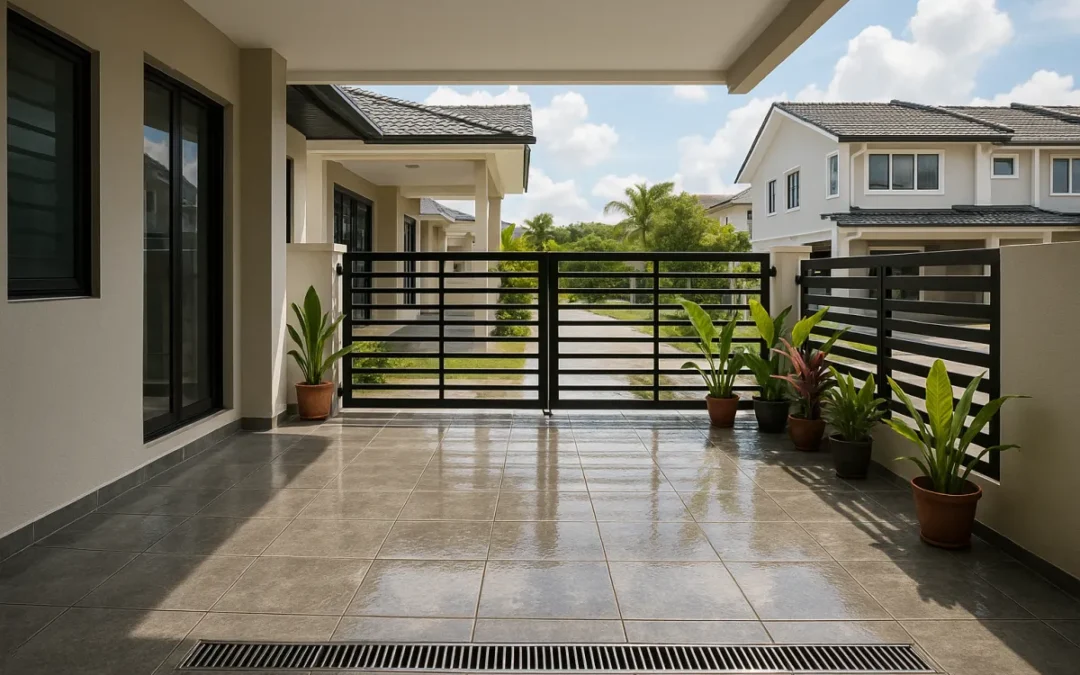
Outdoor tiles in Malaysia have a hard life. They bake in the afternoon sun, take tropical downpours almost every week, grow moss in the shady corners and, in the car porch, carry the weight of a car turning on them every day. A tile that looks perfect indoors can crack, fade or turn dangerously slippery within a year outside.
This guide covers what to look for in outdoor tiles for the three areas most homes need them: the car porch, the balcony and the garden or patio.
What outdoor tiles have to handle
- Water. Heavy rain and standing water. The tile must absorb very little water, and the floor must drain.
- Heat and UV. Strong sun heats tiles up during the day and a storm cools them quickly, so the tile and the adhesive both expand and contract. Colour must not fade.
- Grip. Wet leaves, moss, dust and rain all reduce grip, so outdoor tiles need a textured surface.
- Load. A car porch carries a vehicle turning on the tiles. That is a very different load from people walking.
- Dirt and stains. Tyre marks, oil drips, soil and algae.
The right tile type for outdoors
Porcelain and homogeneous tiles are the right choice for most outdoor areas. Their dense body absorbs very little water, which means less moss, less staining and no problem with the heat-and-rain cycle. Homogeneous tiles have the same colour right through, so a chip from a dropped tool or a tyre scuff does not show a different colour underneath. We explain the differences in our guide to ceramic, porcelain and homogeneous tiles.
Ordinary ceramic wall tiles and polished tiles should never go outside. Ceramic absorbs too much water, and a polished surface becomes slippery the moment it rains.
For garden walls, fences and feature walls, brick and stone veneer gives a natural finish, and breeze blocks let air and light through while still giving privacy.
Car porch tiles
The car porch is the hardest-working floor in a Malaysian house. Four points matter most:
- A strong, textured tile. Homogeneous or outdoor-rated porcelain with a textured or matt finish. Smooth or polished tiles become slippery in the rain and show tyre marks.
- A slip rating of around R11. Our anti-slip tiles guide explains what the ratings mean.
- Full adhesive coverage. Most car porch tiles crack not because the tile is weak but because there are hollow spots underneath. Under the weight of a car, a tile laid on dabs of cement with air gaps below will crack. The tile needs to be fully bedded, with no voids.
- A proper base and fall. The concrete slab must be solid and laid with a gentle slope so water runs off toward a drain instead of sitting under the car.
A mid-grey, stone-look or speckled tile hides tyre marks and dust far better than white or very dark tiles.
Balcony tiles
Balconies in condominiums and landed homes are smaller, but they are often exposed to rain on one side and must drain toward a single floor trap. Choose a matt, slip-resistant porcelain tile and a size that suits the fall: in a small balcony, medium tiles follow the slope to the drain more easily than very large ones.
Many people like to carry the living room tile out to the balcony for a seamless look. That works if the manufacturer offers the same design in an outdoor finish. If not, choose a matching colour in a textured version rather than taking a polished indoor tile outside.
Garden, patio and walkway tiles
For patios, garden paths and around a pool, look for textured porcelain in stone, slate or timber looks. Shaded areas grow moss and algae faster, so they need the most grip and regular cleaning. Steps and slopes are where falls happen, so use your highest-grip tile there and consider a contrasting edge so the step is easy to see.
Installation details that prevent problems
- Movement joints. Outdoor tiles expand in the sun. Large outdoor areas need flexible movement joints at regular intervals and around the edges, set by your contractor. Without them, tiles can lift or crack.
- Outdoor-grade adhesive and grout. Use products made for exterior use, which can take the heat and water.
- Wider grout joints outside. Slightly wider joints than indoors allow for movement.
- Drainage first. No tile survives standing water for years. Get the fall and the drains right before tiling.
Keeping outdoor tiles clean
Sweep regularly, wash with water and a tile cleaner, and deal with moss in shady corners before it takes hold. Avoid acid-based cleaners on grout unless the product is made for it. Oil drips on a car porch come out more easily if cleaned early.
Planning a car porch or patio? Measure the area and use our tile calculator to see how many tiles you need, then see the outdoor tiles in person at our Sungai Buloh showroom.
Frequently asked questions
What is the best tile for a car porch in Malaysia?
A homogeneous or outdoor-rated porcelain tile with a textured, slip-resistant surface, laid with full adhesive coverage on a solid, sloped slab.
Why do car porch tiles crack?
Most often because of hollow spots under the tile, a weak or uneven slab, or missing movement joints. The tile itself is rarely the cause.
Can I use indoor tiles outside?
Only if the same tile is also rated for outdoor use. Polished tiles and ceramic wall tiles are not suitable outdoors.
What colour outdoor tile hides dirt best?
Mid-grey, beige and speckled or stone-look tiles hide dust, tyre marks and water spots better than white or black.
Do outdoor tiles need sealing?
Porcelain and homogeneous tiles generally do not need sealing because they absorb very little water. Cement-based grout can benefit from a sealer in areas that stain easily.