
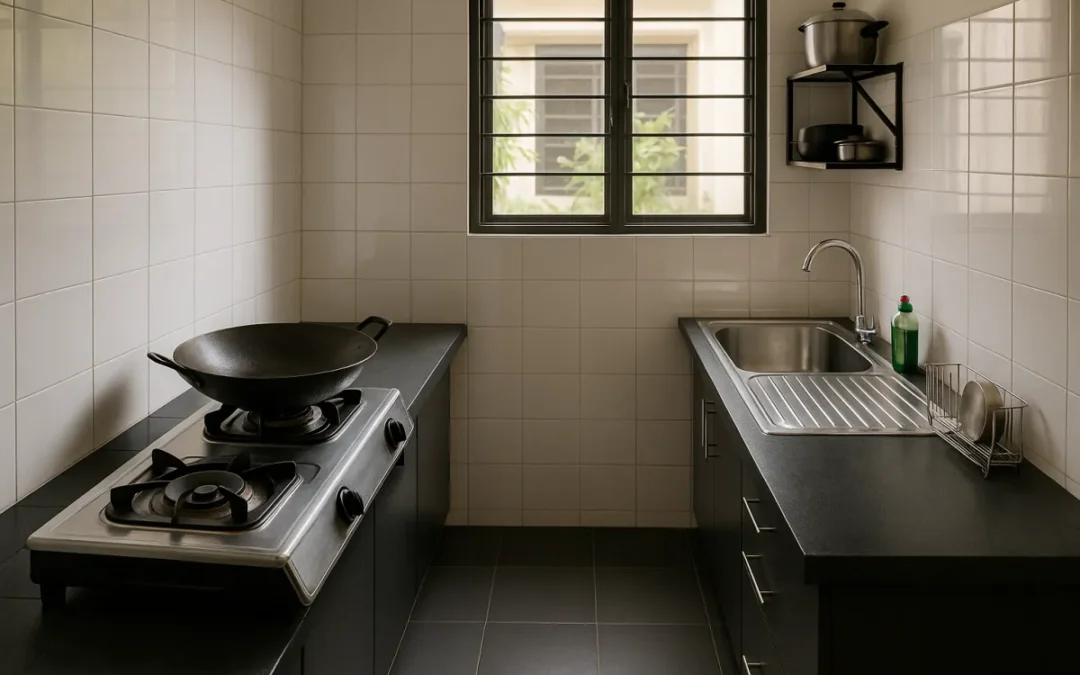
Many Malaysian homes have two kitchens: a dry kitchen for show and light preparation, and a wet kitchen at the back where the real cooking happens. The wet kitchen takes high-heat wok frying, oil spatter, spicy sauces, washing up and floors that are mopped every day. Tiles that look good in the dry kitchen can become greasy, stained and slippery in the wet one.
Here is how to choose floor and wall tiles that stand up to it.
What a wet kitchen puts tiles through
- Oil. Spatter from frying settles on walls and floors and makes floors slippery.
- Stains. Turmeric, chilli, soy sauce and curry stain porous surfaces, especially grout.
- Water. Splashes around the sink and daily mopping.
- Heat. The wall behind a high-flame stove gets hot.
- Heavy use. Dropped pots, moved gas cylinders and constant foot traffic.
Wet kitchen floor tiles
The floor is the most important choice, because a greasy, wet floor is a fall waiting to happen.
- Porcelain or homogeneous. Both are dense, absorb very little and take heavy use. Our tile types guide explains the difference.
- Matt, slip-resistant finish. Look for around R10 to R11. Oil makes floors much more slippery than water alone. Our anti-slip tiles guide explains the ratings.
- Never polished. A polished tile in a wet kitchen is slippery and shows every mark.
- Mid-tone, patterned or speckled colours. Grey, beige, stone and cement looks hide spills between cleans. Plain white shows everything; very dark tiles show dust and dried water marks.
- Medium tile sizes. The floor needs a slight fall toward the floor trap. Tiles around 300 x 300 mm to 600 x 600 mm follow that slope more easily than very large formats.
Wet kitchen wall tiles
Most wet kitchens are tiled from floor to ceiling, or at least to above head height. Here the priority is easy cleaning.
- Smooth glazed ceramic or porcelain. A smooth, glazed surface wipes clean. Textured or matt wall tiles hold grease.
- Glossy or satin finish behind the stove and sink. Grease and splashes come off with one wipe. On walls, gloss is not a safety issue.
- Larger wall tiles mean fewer grout lines. Formats like 300 x 600 mm leave fewer joints for grease to collect in than small mosaics.
- Light colours keep a back kitchen bright, which matters in narrow wet kitchens with a single window.
Grout: the part that goes wrong first
In a wet kitchen, the grout usually looks bad long before the tiles do. Cement grout is porous, so oil and sauces soak in and darken the joints.
- Use epoxy grout on the backsplash behind the stove and sink, and ideally on the floor. It resists stains and oil.
- If you use cement grout, choose a mid-grey and seal it.
- Keep joints as narrow as the tile allows.
Our grout guide covers cement and epoxy grout in detail.
Layout details worth getting right
- Fall and drainage. The floor must slope toward the floor trap so mopping water does not pool in the corners.
- Tile behind the cabinets. Tile the full wall, including behind the base cabinets and appliances, to protect against leaks and pests.
- Skirting. A tiled skirting or a coved junction between floor and wall is easier to clean than a painted wall edge.
- Plan the sink area. Choose the kitchen sink and tap before tiling so the wall tile layout is centred on them.
Keeping it clean
Wipe walls behind the stove after heavy cooking while the grease is still soft. Mop with warm water and a tile cleaner rather than a soap-heavy floor cleaner, which leaves a slippery film. Clean grout lines regularly before stains set in.
Planning a new wet kitchen or a renovation? See our kitchen tiles and sinks together at the Sungai Buloh showroom.
Frequently asked questions
What is the best floor tile for a wet kitchen?
A matt, slip-resistant porcelain or homogeneous tile in a mid-tone colour, around R10 to R11.
Should wet kitchen wall tiles be glossy or matt?
Glossy or satin is easier to clean, especially behind the stove. Matt wall tiles hold more grease.
How high should I tile a wet kitchen wall?
Many homes tile the whole wall to the ceiling. At a minimum, tile to above the height of the cooker hood and the tap.
Is epoxy grout necessary in the kitchen?
It is not required, but it is the best way to stop grout darkening behind the stove and sink. Cement grout works if it is sealed and cleaned regularly.
Can I use the same tile in the dry and wet kitchen?
You can, if the tile is matt and slip-resistant enough for the wet kitchen. Many homes choose a smarter tile for the dry kitchen and a more practical one at the back.