
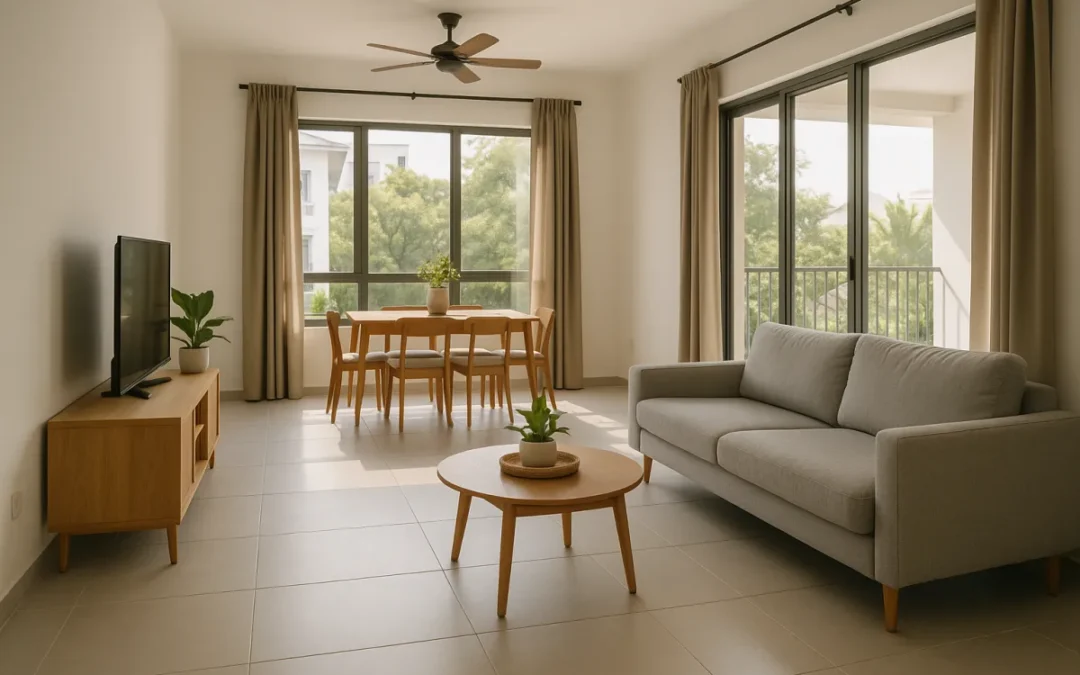
The living room floor is the largest single surface in most Malaysian homes, and it runs straight into the dining area and often the corridor and kitchen. Get it right and the whole ground floor feels calm and spacious. Get it wrong and you live with it for twenty years, because nobody re-tiles a living room lightly.
This guide walks through the four decisions in order: tile type, size, finish and colour, then the laying details that make a good tile look great.
Which tile type for a living room?
For a living room floor the answer is nearly always glazed porcelain or homogeneous tile. Both are dense, hard and take furniture, foot traffic and mopping without complaint. Glazed porcelain gives the widest choice of looks, from marble to stone to concrete; homogeneous is the tougher of the two and hides chips because the colour runs right through. Ordinary ceramic is fine on walls but too soft for a floor that carries a sofa, a dining table and a family. Our ceramic vs porcelain vs homogeneous guide explains the difference in detail.
Wood-look porcelain is worth a mention. It gives the warmth of a timber floor without the humidity, termite and scratch problems timber has in Malaysia, and it works especially well in a living room that opens onto a garden or balcony.
What size?
Bigger tiles mean fewer grout lines, and fewer grout lines make a floor read as one clean surface. That is why 600 x 600 mm has become the standard living room size in Malaysia, and why 600 x 1200 mm and 800 x 800 mm are the usual step up.
- 600 x 600 mm: the safe choice. Easy to lay, easy to cut around columns and doorways, and it suits any living room from a compact apartment to a double-storey terrace.
- 600 x 1200 mm: the modern look. Long rectangles laid in the direction of the room stretch it visually. They need a flatter floor and a tiler who is used to large formats, so ask before you commit.
- 800 x 800 mm and up: for large open-plan living and dining areas. In a small room they can look oversized and waste more in cutting.
Whatever the size, plan for about 10% extra for cuts and breakage, and more for a diagonal or herringbone layout. Our tile calculator works it out from the room’s measurements.
Matt or polished?
This is the decision people agonise over, and the honest answer is that both work in a living room. The difference is in how they live day to day.
Polished
A polished or nano-polished surface reflects light, brightens a room and gives the classic Malaysian showhouse look. It shows dust and footprints more readily, so it suits a household that mops often. It is also slippery when wet, so keep it out of the areas near an open patio door where rain blows in.
Matt
A matt surface hides dust, resists scratches better and is easier underfoot. Modern matt porcelain in stone or concrete looks is the go-to for contemporary interiors. Where the living room runs straight into a wet kitchen or patio, a matt finish is the safer choice across the whole floor.
Satin or lappato
A half-polished finish that sits between the two: some sheen, less glare, fewer visible footprints. A good compromise if you cannot decide.
Light or dark?
Most Malaysian living rooms are best served by a light to mid-tone floor: off-white, beige, light grey, pale stone. Light floors bounce daylight around, make a room look bigger and hide the fine dust that settles everywhere in our climate. Pure white shows every mark; pure black shows every speck of dust and every footprint, and it makes a room feel smaller and hotter under the afternoon sun.
If you want contrast, put the dark tone somewhere small and deliberate, such as the TV feature wall or a dining-area inset, and keep the main floor light. Colour also changes with the light in the room, so always look at a full-size tile in the actual space, at the time of day you use the room most, before you decide.
Laying details that make the difference
- Grout colour: match it to the tile. A contrasting grout turns a calm floor into a grid. See our grout guide for how to choose.
- Thin joints: rectified tiles (with precisely ground edges) can be laid with a 1.5 to 2 mm joint, which makes the floor look almost seamless. Non-rectified tiles need a wider joint to hide small size differences.
- Direction: lay rectangular tiles along the longest wall or toward the main window. That leads the eye through the room.
- Run it through: use the same tile from the living room into the dining area and corridor. Changing tile at each doorway chops the ground floor into boxes.
- Movement joints: a large open floor needs a flexible joint at the perimeter and every 6 to 8 m or so, otherwise the tiles can lift after a few hot years. A good tiler will include them without being asked.
- Flatness: large tiles need a flat screed. Any hollow underneath is a crack waiting to happen when a heavy sofa leg lands on it.
Our installation guide covers the sequence from preparation to grouting.
Three combinations that always work
- Bright modern: 600 x 1200 mm light grey matt porcelain, matching grout, laid lengthwise toward the window. Pairs with white walls and timber furniture.
- Warm classic: 600 x 600 mm beige marble-look polished porcelain, warm grey grout. The familiar Malaysian look, done cleanly.
- Natural: wood-look porcelain planks in the living area, with a plain matt porcelain in the dining area for easy cleaning under the table.
Browse the range on our floor tiles page, or see the glazed porcelain and homogeneous collections directly.
Measure your living and dining area, run the numbers in our tile calculator, then come and see the tiles at full size in our Sungai Buloh showroom.
Frequently asked questions
What is the most popular living room tile size in Malaysia?
600 x 600 mm is the most common, with 600 x 1200 mm the usual choice for a more modern, seamless look.
Are polished tiles a bad idea in a living room?
No. They are bright and easy to mop. They do show dust and footprints more than matt tiles and are slippery when wet, so keep them away from doors where rain blows in.
Should the living room and dining room have the same tile?
Yes, in almost every case. One tile running through the ground floor makes the space feel larger and calmer.
Which colour hides dirt best?
Mid-tone beige, light grey and stone patterns with some variation. Pure white and pure black both show marks quickly.
How much extra tile should I order?
About 10% for a straight layout, and 15% or more for diagonal or herringbone patterns, to cover cuts and breakage.