
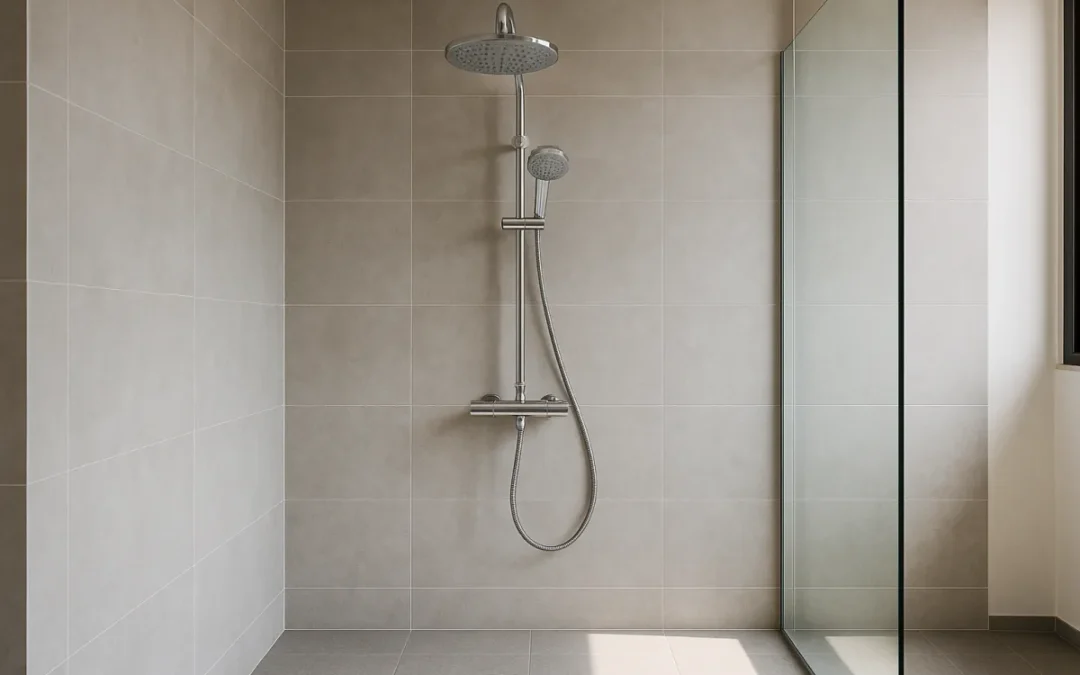
A rain shower head is on almost every Malaysian renovation wish list. It also produces the most common shower complaint we hear: “it just dribbles”. The head was never the problem. The water pressure was, and nobody checked it before buying.
This guide explains the three types of shower, what each one needs from your plumbing and water heater, and what has to be decided before the bathroom is tiled.
The three types
Rain shower head
A large, flat head, usually 200 to 300 mm across, mounted overhead on a ceiling drop or a wall arm. Water falls straight down in a wide, gentle pattern like rain. It looks superb and feels luxurious, but that wide spread of water needs volume and pressure to feel like anything more than a drizzle. A rain head on its own also cannot be pointed, so rinsing the floor or washing a child is awkward. See our rain shower heads.
Hand shower
The handset on a flexible hose, held in the hand or parked on a wall bracket or a slide rail. It is the practical workhorse: it points where you need it, works well at low pressure, and rinses the shower floor. Most hand showers now have several spray modes. See our hand showers.
Shower set (rail shower and combination sets)
A hand shower on a slide rail, or a combination of a rain head and a hand shower with a diverter to switch between them. The combination set is what most people actually want: the rain head for a long shower, the hand shower for everything else. See our shower sets and rail showers.
Water pressure: the decision that decides everything
Malaysian homes get their water in two very different ways, and the shower has to match.
- Gravity-fed from a roof tank (most landed houses). Pressure depends on how high the tank is above the shower. On a ground-floor bathroom it can be reasonable; in a first-floor bathroom directly under the tank it is often very low. A big rain head here is the classic disappointment.
- Pumped or mains-pressure (most condominiums and houses with a booster pump). Pressure is strong and consistent. Rain heads work as intended.
Before buying a rain shower, test the pressure at the existing shower or tap on that floor. If the flow is weak, the options are: fit a booster pump, choose a smaller rain head designed for low pressure, or make a hand shower the main shower and treat the rain head as an occasional extra.
The water heater matters just as much
Most Malaysian bathrooms use an instant electric water heater mounted in the shower. Many of these come with their own hand shower and, importantly, they heat only a limited flow of water. Push a large rain head’s flow through an instant heater and the water comes out lukewarm, because the heater cannot warm that much water that quickly.
A rain shower with properly hot water usually needs either a storage water heater (a tank heater, often in the ceiling, feeding a hot line to a mixer in the shower) or a high-capacity instant heater with a built-in pump, of which several are made for exactly this. Decide the heater and the shower together, not separately.
Mixers: exposed or concealed
If the shower is fed with separate hot and cold lines from a storage heater, it needs a mixer to blend them.
- Exposed mixer: the mixer body sits on the wall with the pipes connecting from behind. Simpler to install and to service later. See our hot and cold mixers.
- Concealed mixer: the valve body is buried in the wall and only the handle and plate show. The cleanest look and the choice for a rain head on a ceiling drop, but the valve must be installed before tiling, at the exact position, and the tiler must cut around it accurately. Access for future repairs is through the plate only.
Where the bathroom uses a cold-only instant heater, the “mixer” is the heater itself, and a simple bib tap or shower tap feeds it.
What to fix before the tiles go on
Showers are the fitting most often compromised by a tiling schedule. These decisions have to be final before the first wall tile is laid:
- The position of the outlets. The rain head’s ceiling or wall arm position, the hand shower outlet, the mixer position and height, and the heater’s water inlet and outlet all need pipes at exact points.
- The heater location and its power point. A storage heater needs a hot line run to the shower; an instant heater needs a dedicated electrical circuit.
- The height of the rain head. High enough for the tallest user with room to spare (commonly around 2.1 to 2.2 m to the underside), and positioned so the water falls in the middle of the shower area, not against the screen.
- Waterproofing. The shower walls and floor are membraned before tiling. Every pipe penetration through the membrane is sealed.
- The drain. A rain head puts a lot of water on the floor at once; the floor needs a proper fall to a floor trap or linear drain that can take it, and a slip-resistant floor tile. Our anti-slip tiles guide covers the floor.
Concealed mixers, ceiling arms and heater positions cannot be moved once tiled. Decide the shower, buy it, hand the installer the fitting drawings, then tile.
Materials and finish
Solid brass bodies with a chrome finish are the durable standard; stainless steel is also good. Plated plastic looks the same on day one and does not last. Match the shower finish to the basin tap, the accessories and the door handle; our bathroom accessories checklist covers the rest of the set. Rain heads with silicone nozzles are easier to keep clear of limescale: rub the nozzles with a thumb and the deposits come off.
Browse the full shower range, and see the bathroom tiles they sit against.
Tell us whether your water is tank-fed or pumped and what heater you have, and we will show you the shower sets that will actually work in your bathroom. Or test them running at our Sungai Buloh showroom.
Frequently asked questions
Why is my rain shower weak?
Almost always low water pressure, usually a gravity-fed tank on a first-floor bathroom. The fix is a booster pump, a low-pressure rain head, or making the hand shower the main shower.
Can I use a rain shower with an instant water heater?
Only with a high-capacity instant heater designed for it, ideally with a built-in pump. A standard instant heater cannot heat a rain head’s flow, so the water comes out lukewarm.
Rain shower or hand shower: which is better?
Most bathrooms are best with both: a combination set with a diverter. If it has to be one, a hand shower is the more practical choice.
How high should a rain shower head be?
Commonly around 2.1 to 2.2 m to the underside of the head, high enough for the tallest user and positioned over the middle of the shower area.
What is a concealed mixer?
A mixer valve installed inside the wall before tiling, with only the handle and a plate visible. It gives the cleanest look but must be positioned exactly before the tiles go on.